
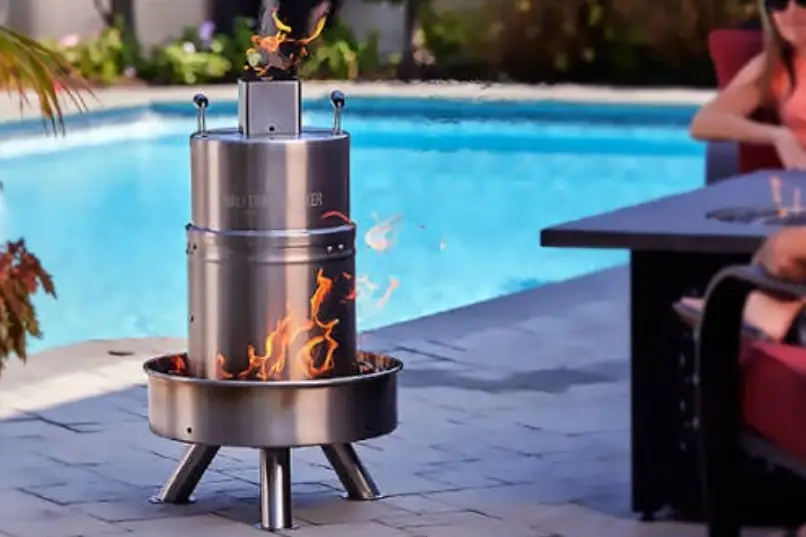
The Halftime Smoker makes a specific, testable promise right in its name: cook low-and-slow barbecue in roughly half the time a traditional offset or horizontal smoker takes. That’s a bold claim in a category where “low and slow” is usually treated as gospel, so we went through how the vertical, indirect-heat design is supposed to work, what it actually costs, and what real buyers say once the novelty wears off.
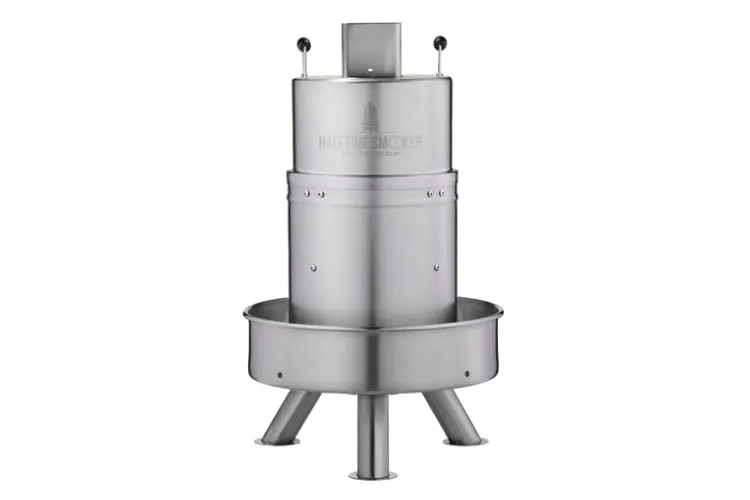
Unlike a horizontal smoker where heat and smoke travel sideways past the meat, the Halftime Smoker uses a vertical charcoal setup with indirect heating, meaning the coals sit below the cooking chamber rather than beside it. The brand’s pitch is that this design needs essentially no maintenance once you’ve closed the lid, no constant vent adjusting or fuel-feeding the way a traditional offset smoker demands through a multi-hour cook.
Food | Estimated Time |
3 racks of ribs | 60–75 minutes total |
Beef brisket | 20–25 minutes per pound |
Pork butt | 15–20 minutes per pound |
Whole chicken | 7–10 minutes per pound |
Prime rib | 12–15 minutes per pound |
For comparison, a traditional offset smoker typically runs 1 to 1.5 hours per pound for brisket, so the Halftime’s claimed 20-25 minutes per pound would represent a genuinely dramatic reduction if it holds up consistently across different cuts, weather conditions, and skill levels, rather than just under ideal test conditions.
The Halftime Smoker is priced at $349.99, discounted from a $399 list price, with an additional 20% off commonly offered on a first order. It ships in black, and based on customer feedback rather than the brand’s own spec sheet (which doesn’t list materials), the body appears to be stainless steel. Official dimensions aren’t published on the product listing, which is a real gap for anyone trying to plan garage, balcony, or storage space before buying.
The product currently holds a 4.5 out of 5 rating across roughly 1,234 ratings, with 48 written reviews, a generally strong showing for a relatively new product category. Not every detail lines up perfectly with the marketing, though. One buyer reported that a wireless meat thermometer probe couldn’t get a signal through the smoker’s stainless steel body, meaning they had to physically open the lid to check internal temperature, which works against the “no maintenance, don’t open it” pitch the smoker is built around. That’s a real, specific limitation worth knowing if you’re planning to rely on a wireless probe rather than the smoker’s built-in approach.
It’s worth placing the Halftime Smoker against the two categories it sits between. A pellet smoker generally offers more precise, set-it-and-forget-it temperature control through an electronic hopper system, but costs significantly more and depends on electricity. A traditional charcoal offset smoker is cheaper and gives you more direct control over smoke flavor, but demands the hands-on attention and multi-hour commitment the Halftime is specifically designed to cut down on. At $349.99, it lands closer to the charcoal side on price while borrowing the lower-maintenance pitch typically associated with pellet smokers, a reasonable middle ground if neither extreme fits how you actually want to cook.
This smoker makes the most sense for people who want real smoked barbecue flavor without committing to the multi-hour, constant-attention ritual a traditional offset smoker demands, think tailgating, weekend cookouts, or anyone short on time who still wants to do real low-and-slow cooking rather than switching to a gas grill entirely. It’s a weaker fit for barbecue purists who see the long, hands-on process as part of the point, or for anyone planning to rely heavily on a wireless thermometer probe given the reported signal issue.
The brand’s own estimates suggest significantly faster cook times than a traditional offset smoker, for example 20-25 minutes per pound for brisket versus the 1 to 1.5 hours per pound typical of offset smoking. We didn’t find independent third-party testing confirming these exact figures, so treat them as the manufacturer’s claim rather than a verified benchmark.
Dimensions aren’t published on the official product listing, which makes pre-purchase space planning harder than it should be. If exact measurements matter for where you’ll store or use it, it’s worth contacting the seller directly before ordering.
At least one buyer reported that a wireless probe wouldn’t transmit a signal through the smoker’s stainless steel body, requiring the lid to be opened to check temperature manually. If a wireless setup is important to you, this is worth factoring in.
At $349.99, it sits above basic charcoal smokers but well below premium pellet smoker setups, positioning it as a mid-range option aimed at buyers who want faster results without full offset-smoker commitment.
The Halftime Smoker’s vertical, indirect-heat design is a genuine point of difference from traditional offset smoking, and the 4.5-star track record across more than a thousand reviews suggests most buyers come away satisfied. The gaps worth noting before buying are real, though: no published dimensions, no independent verification of the headline time-saving claims, and at least one reported issue with wireless thermometer compatibility. For anyone who wants real smoked flavor without an all-day commitment, it’s a reasonable buy at $349.99. If you’re outfitting the rest of your outdoor cooking setup at the same time, our Made In Cookware review covers another category worth getting right.