Yoto Player Buying Guide: How It Works and Why Kids Love It
Get 10% Off Yoto Coupon Code
Get 10% Off Yoto Coupon Code
AFF-ABBY10
SHOW COUPON
On Going Offer
Share
It Works100% SuccessIt Doesn’t
12% Off On Your Orders At Yoto
12% Off On Your Orders At Yoto
AFF-BBL26
SHOW COUPON
On Going Offer
Share
It Works100% SuccessIt Doesn’t
Get Yoto Mini for Only $69.99 with This Coupon
Get Yoto Mini for Only $69.99 with This Coupon
AFF-BBL26
SHOW COUPON
On Going Offer
Share
It Works100% SuccessIt Doesn’t
Get Yoto Player for Only $99.99 with This Coupon
Get Yoto Player for Only $99.99 with This Coupon
AFF-EVERYDAY10
SHOW COUPON
On Going Offer
Share
It Works100% SuccessIt Doesn’t
Yoto Play Free Shipping
Yoto Play Free Shipping
DEAL ACTIVATED
ACTIVATE DEAL
On Going Offer
Share
It Works100% SuccessIt Doesn’t
Yoto Cards Upto 30% Off Now
Yoto Cards Upto 30% Off Now
DEAL ACTIVATED
ACTIVATE DEAL
On Going Offer
Share
It Works100% SuccessIt Doesn’t
Save 10% Off On Yoto Play
Save 10% Off On Yoto Play
AFF-EVERYDAY10
SHOW COUPON
On Going Offer
Share
It Works100% SuccessIt Doesn’t
Sign Up for 10% Off On First Order
Sign Up for 10% Off On First Order
DEAL ACTIVATED
ACTIVATE DEAL
On Going Offer
Share
It Works100% SuccessIt Doesn’t
Yoto Bundles Upto 20% Off
Yoto Bundles Upto 20% Off
DEAL ACTIVATED
ACTIVATE DEAL
On Going Offer
Share
It Works100% SuccessIt Doesn’t
The Yoto Player is one of those kids’ products that sounds simple at first, then makes more sense the longer you look at it. At its core, it is a screen-free audio player for children. But in real family life, it often becomes more than that: a story box, a music player, a bedtime helper, a morning routine tool, and a small piece of independence for kids.
If you are wondering whether it is just a cute gadget or something families actually use every day, the short answer is that Yoto has built the Player around repeat use. The current Yoto Player experience includes Yoto Cards, daily podcast access, family radio stations, free stories and sleep sounds, Bluetooth, offline storage, a night light, an OK-to-Wake clock, and long battery life.
This guide breaks down how the Yoto Player works, what makes it different, and why so many kids end up loving it.
What Is the Yoto Player?
The Yoto Player is a screen-free kids’ audio device designed mainly for children around ages 3 to 12+. Instead of tapping through apps or staring at videos, kids use physical Yoto Cards to play stories, music, activities, podcasts, and other audio content. Yoto also offers built-in listening options through the player and the companion app.
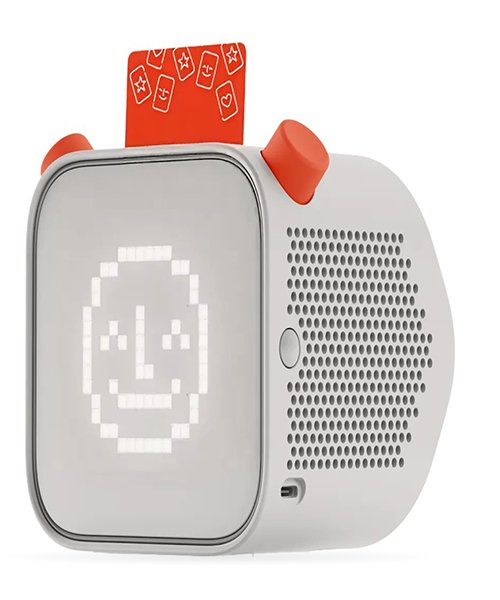
What makes it stand out is that it tries to keep the experience simple for kids while still giving parents useful controls. The Yoto Player includes a programmable night light and clock, OK-to-Wake settings, Yoto Daily, family radio stations, free stories and sleep sounds, and room temperature display.
So it is not just a story player. It is more like a child-friendly audio hub.
How Does the Yoto Player Work?
The main way it works is very easy: you insert a Yoto Card, and the Player reads it and starts the audio. That card could contain an audiobook, music, educational content, activities, sound effects, or a custom setup made by the family. The whole system is built around cards helping kids explore what interests them.
These are physical cards that unlock audio content. For a child, this is a big part of the appeal. It feels more tactile and independent than handing over a phone. Instead of asking an adult to search for something every time, a child can just choose a card and play it. The Yoto card ecosystem includes stories, music, podcasts, activities, and age-based collections.
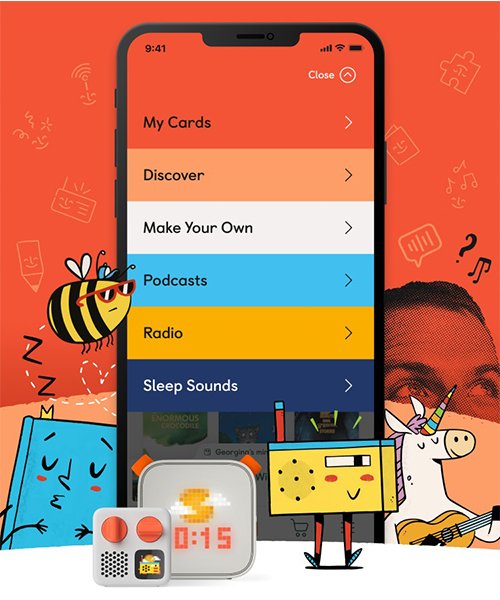
The Yoto Player is not limited to purchased cards. Yoto also includes free audio built into the platform, including Yoto Daily, radio, podcasts, stories, and sleep sounds. Yoto Daily can be accessed from the player when connected to Wi-Fi, and additional podcasts can be linked through the app.
The free app is where parents get more control. Families can access cards instantly, record stories in their own voice, change the night-light color, and manage shared family accounts. It also supports custom audio and podcast linking.
So from a parent’s point of view, the system is flexible. From a child’s point of view, it stays simple.
What Can Kids Listen To?
Quite a lot, actually.
Kids can use the Player for:
audiobook stories
music
educational activities
podcasts
sound effects
radio
sleep sounds
custom audio on Make Your Own cards
That range is a big reason the Player lasts longer than some kids’ gadgets. It can work for a preschooler listening to bedtime stories, then still make sense later for music, chapter books, podcasts, and routine tools.
What Features Does the Yoto Player Have?
This is where the Yoto Player starts to feel more substantial than a simple card reader.
Some of the standout features include:
up to 24 hours of battery life
acoustically engineered stereo sound
600+ hours of storage for offline listening
programmable night light and clock
OK-to-Wake settings
room thermometer
Bluetooth support
free white noise and sleep sounds
headphone support
Make Your Own compatibility
That combination matters because it means the Player can fit into multiple parts of daily family life. It is entertainment, but also routine support.
Why Do Kids Love the Yoto Player?
A lot of the answer comes down to one thing: control.
Children usually like the Yoto Player because it lets them choose what to hear without needing to borrow a phone or scroll through a screen. The card format is easy to understand, the buttons are physical, and the whole system feels like it belongs to them.
Here are the biggest reasons kids tend to connect with it:
It feels independent
Kids can insert a card and start listening on their own. That small bit of independence matters more than adults sometimes expect.
It is screen-free
There is no video overload, no endless swiping, and no pressure to stare at something. For many families, that is one of the biggest selling points.
It becomes part of routines
Bedtime stories, morning wake-up rules, quiet time, and calm-down listening are all things the Yoto Player supports well.
It grows with them
Because the content ranges from younger children’s stories to older-kid podcasts and longer listening, it is not something a child necessarily outgrows quickly.
Why Do Parents Like It?
Parents and kids usually like it for different reasons.
Kids like it because it is fun and theirs. Parents tend to like it because it solves problems.
The main parent-friendly benefits are:
1) It reduces screen time
This is the most obvious one. Yoto is built around audio-first engagement, not visual stimulation.
2) It helps with bedtime
The Player’s night light, OK-to-Wake clock, white noise, and sleep sounds are all features that support bedtime and mornings in a practical way.
3) It is flexible
Parents can buy content, use free audio, or create their own recordings with the app and Make Your Own cards. That means the Player can be more personal than a fixed toy.
4) It works offline
The Player supports 600+ hours of offline listening, which makes it more practical for travel and for households that do not want to rely on constant streaming.
Is the Yoto Player Good for Bedtime?
Yes, and this is probably one of its strongest use cases.
The Yoto Player is clearly designed to play a role in evening and wake-up routines. Its bedtime-friendly features include:
night light
clock
OK-to-Wake function
sleep sounds
white noise
bedtime-friendly listening across ages
That makes it more than just something to play a story on. It can become part of the structure of bedtime, which is often where the product becomes most useful for families.
Can You Use Your Own Audio?
Yes.
This is one of the nicest parts of the system. Yoto’s Make Your Own feature lets families record their own voice, use personal MP3s, and even link podcasts or radio to custom cards.
That can make the Player feel a lot more personal. For example, families can create:
recorded bedtime messages
favorite playlists
custom story recordings
podcast shortcut cards
travel listening cards
For some families, this feature alone makes the platform much more flexible than a standard toy audio device.
Who Should Buy the Yoto Player?
The Yoto Player makes the most sense for families who want:
a screen-free audio option
a bedroom-friendly device
help with bedtime and wake-up routines
something kids can use independently
long battery life and offline listening
a mix of paid and free audio
the ability to make custom audio cards
It is especially appealing if you want one product that can serve as both an entertainment tool and a routine helper.
Who Might Not Need It?
The Yoto Player may feel less necessary if:
your child already uses another audio device happily
you mostly want something tiny for travel only
you do not think you would use the bedtime features
you are not interested in building a card-based audio library
In that case, a smaller or simpler audio option might make more sense.
Final Thoughts
The Yoto Player works because it keeps the child-facing experience simple while quietly offering more depth than you first expect. Kids get cards, buttons, stories, music, and a sense of control. Parents get a screen-free system with bedtime support, app tools, custom audio options, and enough flexibility to keep it useful over time.
That is really why kids love it. It does not feel like a lecture or a gadget built for adults. It feels like something they can own, understand, and use on their own terms.