
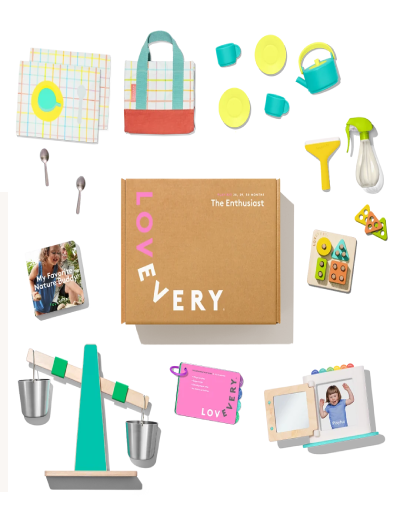
Lovevery’s most emotionally compelling documented outcome comes from Today’s Parent’s reviewer who found her easily-distracted 4-year-old — who routinely asks for TV — playing the syllable game from the Reading Skillset Play Kit independently one morning without any prompting. A child who voluntarily chooses a developmental activity over television is the most honest available evidence that Lovevery’s play design genuinely engages children rather than just impressing parents. The Every Mom’s multi-editor team who have all used Lovevery independently confirms the sustained quality: “All the moms on our team have varying parenting styles, product preferences, and kid personalities. Yet no matter how different we are, most of us have used one specific playtime subscription: Lovevery.” The Reddit community’s most upvoted Lovevery sentiment — “Months 13-24 are GOLD. I wouldn’t skip any of them” — provides the most practical developmental timing guidance available. The honest caveat: a 3-year-old parent who found the toys were not open-ended enough for their child’s interests and ended up with “SO MANY toys to store” documents that Lovevery works best within its specific developmental window rather than as a long-term toy collection.
✅ 4-year-old chose syllable game over TV — documented unprompted engagement. The Today’s Parent reviewer who found her easily-distracted daughter playing the syllable game independently instead of asking for TV is the most honest available child engagement proof. No parent prompting, no screen time — pure voluntary engagement with a developmental toy is the outcome every parent buying Lovevery is hoping for, documented as genuinely achievable.
✅ “Months 13-24 are GOLD — I wouldn’t skip any of them” — Reddit 10 upvotes. The most actionable available Lovevery guidance: the 13-24 month developmental window is specifically identified by the Reddit community as the brand’s strongest performance period. For parents who are considering when to start or which kits to prioritise — this community consensus is the most practically useful available information.
✅ 6-year-old still using toys — beyond the stated 0-4 year range. A Reddit community member with 8 upvotes documents their oldest child at almost 6 years old still using Lovevery toys and games. For parents who worry about a 4-year ceiling on value, this documented account of continued use past the design age range is meaningful reassurance.
✅ Items that seemed outgrown return to use — evolving play documented. A Reddit parent documents: “Items that I thought he had outgrown, he finds new ways to play with them as he gets older.” The best developmental toys evolve in how children engage with them rather than having a single finite use before discard — this is documented as a real Lovevery characteristic.
✅ High resale value on Vinted, eBay, Facebook Marketplace — documented. WanderLust Chloe’s review specifically documents: “you’ll discover you can get some really great prices when you do finally want to pass on your old items.” The Reddit community confirms: “when you break out the cost per toy, it’s frequently cheaper than anything comparable you’d buy new.” High resale value reduces the effective net subscription cost for parents who resell between developmental stages.
✅ Tested with four children aged 2-5 — high quality across the full age range tested. Baby Savers’ reviewer who personally tested a Lovevery play kit with four young children between 2 and 5 years old documents the play guide, book, art supplies, picture cards, and Montessori-style items together as making the kit worth it. A four-child simultaneous test is the most robust available in-home quality validation.
✅ “Best quality toys you will find on the market” — Bless Our Littles three-kit owner. A parent who received three Lovevery play kits documents genuine enthusiasm: “Lovevery is hands down the BEST quality toys you will find on the market.” After three kits, the quality consistency documented as maintained — not just a first-kit positive impression.
✅ Play Guide included — professional developmental context for every toy. Every Lovevery kit includes a Play Guide that explains how each toy supports the specific developmental stage, what to look for in the child’s response, and how to extend the play beyond the toy itself. The Every Mom editorial team specifically documents the Play Guide as a standout feature — the educational context makes parents confident the toys are working rather than just entertaining.
✅ Subscription easy to pause or cancel — one-off purchases also available. WanderLust Chloe confirms the subscription flexibility: “It’s easy enough to purchase them as one-off play kits or individual items if you’re unsure of the long-term commitment.” The subscription is documented as genuinely flexible — pause when needed, cancel without penalty, purchase individual kits without commitment.
✅ Available at Target — no subscription required for single kit trial. WanderLust Chloe documents Target availability of Lovevery products — meaning parents can buy a single age-appropriate kit before committing to a subscription, and can access the brand without a direct Lovevery account.
✅ Sturdy construction — “took a beating from my 1-year-old and survived.” Today’s Parent documents the Reading Skillset Play Kit as made from high-quality materials that survived genuine toddler use. For parents who have seen cheaper toys disintegrate within weeks of a 1-year-old’s attention — documented survival of genuine toddler-level use is a quality credential.
✅ Sustainability commitment — 90% renewable, biobased, or recycled materials by 2025 target, net zero by 2030. WanderLust Chloe documents Lovevery’s specific sustainability targets — 90% renewable or recycled materials by 2025 and net zero carbon by 2030. For parents who choose products based on environmental values, these are documented company commitments rather than vague marketing.
❌ 3-year-old lost interest entirely — “wouldn’t waste my money again.” The most balanced negative available for Lovevery: A Life Well Consumed’s parent documents that after a positive early experience, their 3-year-old had “absolutely no interest in any of them anymore.” The toys are not open-ended enough for some older toddlers with specific play preferences. This is the documented age ceiling for some children — Lovevery works best for younger developmental stages and specific learning-oriented play personalities.
❌ Too many toys accumulate — storage becomes an issue. The same parent documents: “I have ended up with SO MANY toys to store that I wasn’t expecting so the ‘less clutter’ aspect also doesn’t ring true.” For parents in smaller homes or those who specifically want a low-clutter toy collection, the subscription model generates documented volume that requires dedicated storage planning.
❌ Designed in Boise, Idaho but manufactured in China — not US-made. Anna in the House specifically documents: “Lovevery is designed in Boise ID, but made in China, NOT made in the USA.” For parents who specifically want US-manufactured children’s toys, this is a documented reality that Lovevery’s American branding does not make obvious.
❌ Premium pricing — $80–$120 per kit delivered every 2-3 months. The subscription cost at $80-$120 per kit is the most consistent documented buyer consideration. Reddit specifically addresses the cost objection: “when you break out the cost per toy, it’s frequently cheaper than anything comparable you’d buy new” — but the upfront per-kit cost requires deliberate budget planning for most families.
❌ Small pieces in some kits — not suitable for younger siblings simultaneously. Today’s Parent documents small pieces in some kits that require vigilance in multi-child households with different developmental stages. A 4-year-old’s kit may contain pieces that are choking hazards for a 1-year-old sibling in the same play environment.
This review draws on Today’s Parent’s Reading Skillset Play Kit independent test (November 2025), The Every Mom’s multi-editor team review, WanderLust Chloe’s 2026 comprehensive kit review, Baby Savers’ four-child in-home test, A Life Well Consumed’s two-year parent account, Bless Our Littles’ three-kit owner review, Anna in the House’s manufacturing-focused honest review, and Uninfluenced Review’s Reddit community analysis (April 2026). No affiliate relationship with Lovevery exists.
Lovevery offers age-specific play kits for children from birth through 4 years old, delivered on a subscription basis or purchasable as one-off kits. Each kit is named for the developmental stage it targets: The Looker (0-3 months, high-contrast visual stimulation), The Charmer (3-4 months, sensory engagement), The Senser (5-6 months, exploratory touch and sight), The Thinker (11-12 months, early problem-solving), and so on through to the 4-year kits focused on early literacy, numeracy, and social learning.
Each kit includes a physical Play Guide — a booklet that explains the developmental science behind every toy, what skills each item targets, what to observe in the child’s engagement, and how to extend play beyond the toys themselves. The Play Guide is consistently documented as one of the kit’s most valued components — giving parents professional-level developmental context rather than just toys without educational framing.
Lovevery’s core design principle is developmental stage specificity. Each kit is not designed for a broad age range — it targets a specific 2-3 month developmental window when the child’s brain is specifically primed for the stimuli in that kit. A high-contrast black-and-white mobile for a newborn whose visual system is specifically responsive to contrast and simple shapes. A cause-and-effect rattle for a 3-4 month old who is entering the period when understanding action-and-consequence is a primary developmental task. A syllable game for a 4-year-old entering the phonological awareness window that precedes reading.
This developmental timing specificity is why parents document their children being genuinely engaged — not because the toys are more entertaining than generic alternatives, but because they arrive precisely when the child’s developmental readiness makes them maximally meaningful. A toy that arrives at the right developmental moment creates genuine engagement; the same toy at the wrong moment would be ignored.
Reddit’s most upvoted Lovevery consensus — “Months 13-24 are GOLD. I wouldn’t skip any of them” — reflects a specific developmental window that Lovevery’s kits serve with particular excellence. This period covers the transition from object permanence to early symbolic play, the explosion of language comprehension, early fine motor skill refinement, and the beginning of interactive rather than parallel play. The kits for this window are documented as having the longest individual engagement life per toy — children return to these items repeatedly rather than moving through them quickly.
The Reddit documentation confirms this: “The past 2-3 boxes have actually been the best we’ve received! Better and longer life than the 1 year old kits.” For parents who are deciding when to start Lovevery, the 13-24 month window is the documented highest-value entry point.
Lovevery’s high resale value on Vinted, eBay, and Facebook Marketplace is the documented mechanism that makes the subscription economics more accessible for cost-conscious parents. Reddit’s practical guidance: “when you break out the cost per toy, it’s frequently cheaper than anything comparable you’d buy new” — reflects a calculation where the net cost after resale can reduce to $20-$40 per kit rather than $80-$120. For parents who are disciplined about reselling each kit when their child moves to the next stage, the documented resale market makes Lovevery genuinely more cost-competitive than its face-value subscription price suggests.
Bless Our Littles’ reviewer specifically notes: “If you plan on having more than one kiddo, it’s absolutely worth it to subscribe to Lovevery.” The sturdy documented construction means kits survive to be used by subsequent children — the capital investment in the subscription pays off across multiple developmental passes through the same kits. The Play Guide also retains value for second children because the developmental guidance is reusable even when the toys are familiar.
For single-child families who plan to resell after each stage — the economics still work through the resale market. For multi-child families who plan to retain kits — the economics work even more clearly across multiple uses.
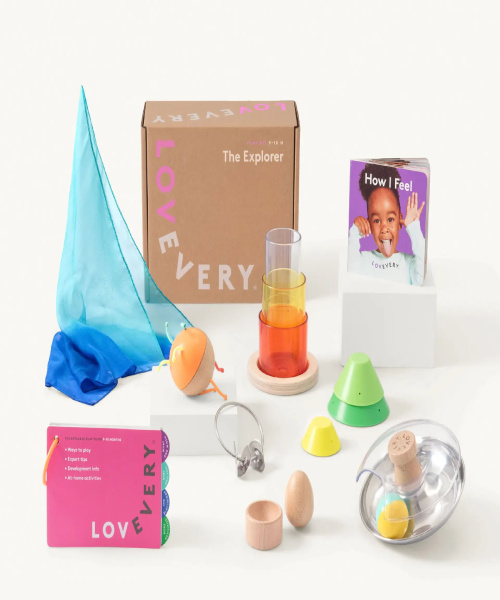
Reddit’s documented gold standard — the most consistently praised developmental window across the entire Lovevery range. Best for parents who are new to Lovevery and want to start at the highest-documented-value period. If you can only subscribe for one developmental window — this is the documented optimal entry point.
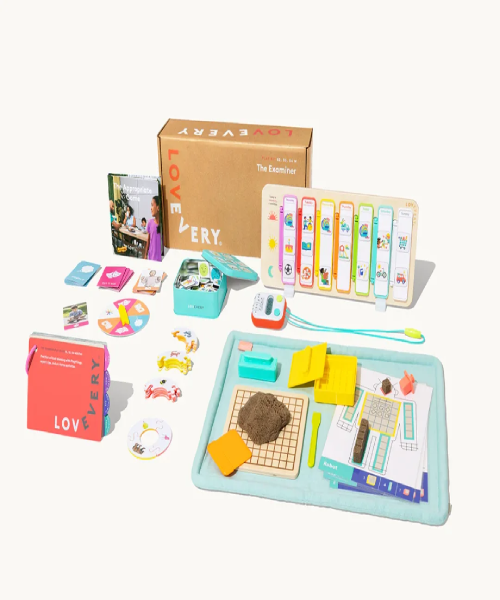
Today’s Parent’s specifically tested kit — the 10 skill-based games including the syllable game that engaged a distracted 4-year-old independently instead of TV. Best for parents of preschool-age children who want a structured phonological awareness and early literacy programme in play format.
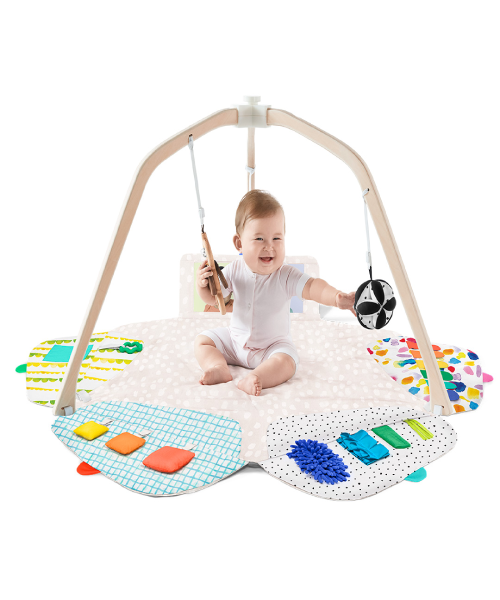
The Every Mom editorial team’s most-cited starting point — the play gym with high-contrast visuals, multiple sensory elements, and a design that evolves as the baby develops from visual tracking to reaching and grasping. Available as a one-time purchase without subscription commitment. Best for a baby registry item or the lowest-commitment Lovevery entry for parents who want to assess the brand before subscribing.
The safest first purchase — one age-appropriate kit from Target to assess child engagement over 2-3 weeks before subscribing. The physical availability at Target means no minimum purchase commitment and immediate in-store access without delivery timing.
“My 4-year-old is very easily distracted, but I found her one morning playing the syllable game by herself instead of asking for TV. I liked that there were things we could do together and things she could play on her own.” — Today’s Parent Reading Skillset reviewer
“Months 13-24 are GOLD. I wouldn’t skip any of them.” — Reddit community, 10 upvotes
“My oldest is almost 6 and he still uses a lot of the toys and games.” — Reddit community, 8 upvotes
“The high quality toys, along with the play guide, book, art supplies, picture cards and Montessori-style items make the kit worth it.” — Baby Savers four-child in-home test
“Honestly, I wouldn’t waste my money on Lovevery toys again. Our 3 year old has absolutely no interest in any of them anymore. I don’t consider them open ended. The quality is very good, that is for sure. I have ended up with SO MANY toys to store.” — A Life Well Consumed two-year parent account
“Lovevery is designed in Boise ID, but made in China, NOT made in the USA.” — Anna in the House manufacturing documentation
“After receiving three Lovevery play kits, I can honestly say that they are absolutely worth it! Not only do their toys keep my daughter entertained, but they are durable and such high quality. My only regret is that I didn’t buy them sooner!” — Bless Our Littles three-kit owner
Best for: Parents of children in the 0-4 age range who want stage-appropriate developmental toys without the research burden of choosing individually, families with multiple children who will use the same kits across different children, parents who specifically value the Play Guide’s professional developmental context alongside the toys, and parents who will resell kits to reduce the net subscription cost.
Not ideal for: Children with specific play preferences that lean toward open-ended creative toys rather than structured skill-building activities (the 3-year-old who lost interest is the documented example), parents in smaller homes where toy accumulation creates a storage challenge, parents who specifically want US-manufactured children’s toys, and families for whom the $80-$120 per kit cost without the resale offset is not sustainable.
Most practical first step: Buy one age-appropriate kit from Target. Spend 2-3 weeks assessing how much your child actually engages with the developmental activities versus moving quickly through the items. If genuine sustained engagement is documented — subscribe. If your child moves through items quickly without returning — Lovevery may not match their specific play personality.
Feature | Lovevery | Monti Kids | Kiwi Co | Green Toys | Melissa & Doug | Sago Mini |
Developmental Targeting | ✅ Stage-specific 2-3 month | ✅ Montessori | ✅ STEAM | ⚠️ General | ✅ Good | ⚠️ General |
Price Per Kit | $80–$120 | $99–$148 | $20–$30 | $15–$40 | $15–$60 | $8–$25 |
Play Guide Included | ✅ Every kit | ✅ App | ❌ | ❌ | ❌ | ❌ |
Subscription Flexibility | ✅ Pause/cancel easy | ✅ | ✅ | N/A | N/A | ✅ |
Resale Value | ✅ High | ✅ Good | ⚠️ Lower | ⚠️ Moderate | ✅ Good | ⚠️ Low |
Manufacturing | ⚠️ China | ✅ USA | ⚠️ Various | ✅ USA recycled | ⚠️ Various | ⚠️ Various |
Age Range | 0–4 years | 0–3 years | 0–16 years | All ages | All ages | 2–5 years |
Retail Availability | ✅ Target | ❌ | ✅ | ✅ Wide | ✅ Wide | ✅ Some |
Open-Ended Play | ⚠️ Structured focus | ✅ Better | ✅ Good | ✅ Good | ✅ Good | ✅ Good |
Reddit’s documented consensus: months 13-24 are the gold standard — the most consistently praised developmental window with the longest individual toy engagement life. The 0-12 month kits are documented as functional and developmentally appropriate but with shorter individual toy engagement windows. The 3-4 year kits are documented as excellent for literacy and numeracy focused children — less universally engaging for children with strong open-ended play preferences.
No — designed in Boise, Idaho but manufactured in China. Anna in the House specifically documents this for parents who want US-manufactured children’s toys.
Yes — more clearly than for a first child. The sturdy construction is documented as surviving multiple children, the Play Guide retains value as developmental guidance across uses, and the per-kit cost effectively halves when used across two developmental passes.
Yes — individual kits are available from the Lovevery website and from Target. The subscription delivers kits on a schedule matched to the child’s developmental stage and costs slightly less per kit than individual purchases.
Two documented patterns: toy accumulation in smaller homes where storage becomes an issue, and children with open-ended creative play preferences who don’t engage with Lovevery’s more structured skill-building activities beyond the early developmental stages.
Lovevery play kits deliver on their core developmental promise — stage-appropriate toys that engage children at the precise developmental moment when specific stimuli are most meaningful, accompanied by Play Guide documentation that gives parents professional-level context rather than just items in a box. The documented outcomes — a 4-year-old choosing the syllable game over TV, a 6-year-old still using kits designed for a 4-year-old, Reddit’s 10-upvote endorsement of the 13-24 month window — confirm genuine developmental quality rather than premium packaging around generic toys. The honest qualifications are three: Lovevery works best within its developmental window and specifically for children with learning-oriented play preferences; toy accumulation is a real storage consideration; and the China manufacturing is a documented reality for parents who prioritise local sourcing. Start with a single Target kit at the 13-24 month window. If your child engages — subscribe.
Category | Score |
Developmental Targeting | 9.5/10 |
Play Guide Quality | 9.0/10 |
Toy Construction Durability | 9.0/10 |
Long-term Child Engagement | 8.5/10 |
Resale Value | 9.0/10 |
Open-Ended Play Suitability | 6.5/10 |
Manufacturing Origin | 6.0/10 |
Subscription Flexibility | 8.5/10 |
Value Per Kit (After Resale) | 8.5/10 |
Overall | 8.3/10 |