
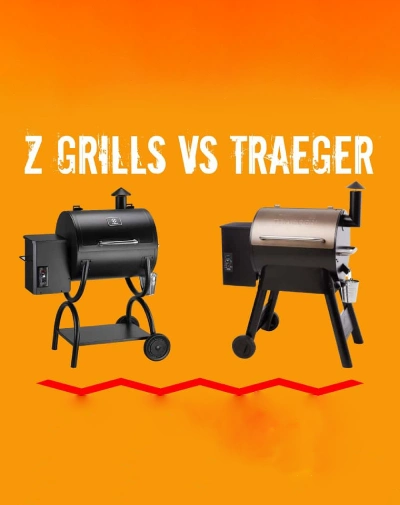
Traeger basically built the pellet grill category, and it still sets the bar most other brands get measured against. Z Grills has spent the last few years positioning itself as the budget-friendly option that gives you most of what Traeger offers for a lot less money. That’s a tempting pitch, but “cheaper” and “worth it” aren’t always the same thing. Here’s an honest look at where these two brands actually differ.
Where Each Brand Comes From
Traeger’s story starts in 1985 in Oregon, where Joe Traeger invented the wood pellet grill. It’s not a newer company chasing a trend, it created the trend, and that history is why it still has the widest dealer network and the most brand trust in the space. The company went public in 2021.
Z Grills is much newer, founded in 2016, though it actually got its start manufacturing pellet grills for other brands before launching its own line. It’s sold direct-to-consumer, runs its customer service out of Salt Lake City, Utah, and leans on a parent company with over 30 years in grill manufacturing and a global engineering team. The pitch is basically: same underlying manufacturing know-how, lower markup, factory-direct pricing.
Price
This is the clearest difference. Z Grills sits in the $400-$1,200 range depending on size and features. Traeger’s lineup climbs a lot higher, up to roughly $3,800 for a fully-loaded Timberline. If budget is your main constraint, Z Grills wins this category outright. That said, when you compare similarly-sized entry models from each brand, the price gap sometimes shrinks to just a few dollars, so it’s worth comparing specific models rather than assuming Z Grills is always dramatically cheaper.
Build Quality
Traeger’s higher-tier models use 16-gauge steel and tend to feel noticeably more solid, weighing in around 138 lbs on comparable units. Z Grills uses dual-wall insulation, which does help with heat retention, but the stainless steel lid on many models has been described as feeling thinner or “cheaper” next to Traeger’s construction, and it comes in slightly lighter at around 132 lbs. Neither is a dealbreaker on its own, but if you’re the type who notices build quality the moment you touch a hinge, Traeger has the edge here.
Temperature Control
Both brands now use PID controllers with 5-degree temperature increments, so the wild temperature swings that plagued older pellet grills aren’t really a factor with either one anymore. Where they split is the ceiling: Traeger reaches up to 500°F on comparable models, while Z Grills tops out closer to 450°F. That 50-degree gap matters if you care about getting a real sear on steaks, less so if you’re mostly doing low-and-slow smoking.
Wi-Fi and App Experience
Traeger’s WiFIRE app has a reputation for being polished and dependable, which is a real point in its favor if remote monitoring matters to you. Z Grills’ app has had a rougher run, with users reporting connectivity issues and weaker signal reliability. If you plan to actually use the app daily rather than as a nice-to-have, this is one of the more noticeable gaps between the two brands right now.
Hopper Capacity
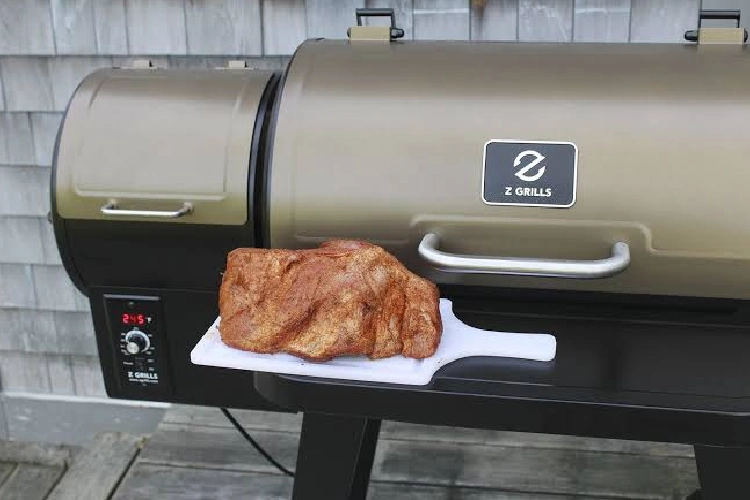
Z Grills actually wins this one. Most models hold around 28 lbs of pellets versus roughly 24 lbs on comparable Traegers, meaning fewer refills on long cooks. Z Grills doesn’t include a pellet-level window though, so you’ll still be checking levels manually either way.
Warranty
Traeger offers a 10-year warranty on most current models, which is one of the longest in the industry and a genuine selling point. Z Grills covers its grills for 3 years, with the usual exclusions around paint, rust, and units bought from unauthorized sellers. If long-term coverage matters to you as much as upfront price, this gap is worth weighing seriously, since a repair years down the line could eat into whatever you saved buying the cheaper grill.
So, Which One Should You Buy?
If you want the most polished experience, the strongest warranty, and don’t mind paying more for the brand that built the category, Traeger is the safer bet, especially if resale value or dealer support matters to you. If you’re working with a tighter budget and want solid performance without the premium price tag, and you’re fine with a slightly less refined app and shorter warranty window, Z Grills gets you into pellet grilling for a lot less money without a huge drop in day-to-day cooking results.
Neither is the wrong answer. It comes down to whether you’re optimizing for long-term peace of mind or getting the best cooking results per dollar spent today.
Frequently Asked Questions
Is Z Grills as good as Traeger?
For everyday grilling and smoking, it holds up reasonably well and costs a lot less. Traeger pulls ahead on max temperature, app reliability, and warranty length.
Why is Z Grills so much cheaper than Traeger?
Z Grills sells factory-direct and originally built pellet grills for other brands before launching its own line, which keeps its overhead and markup lower than an established, publicly traded company like Traeger.
How long is the Z Grills warranty compared to Traeger's?
Z Grills offers 3 years; Traeger offers 10 years on most current models. That gap is one of the bigger practical differences between the two brands.
Does Z Grills have Wi-Fi like Traeger?
Yes, several Z Grills models include app connectivity, though it hasn’t matched Traeger’s WiFIRE app in reliability based on user reports.
Internal Link Suggestions
- Anchor text: “Grilla Grills vs Traeger” → place in the “So, Which One Should You Buy” section → target: /blog/grilla-grills-vs-traeger (cross-link your two pellet grill comparison pieces)
- Anchor text: “best budget pellet grills” → place in the “Price” section → target: /blog/best-budget-pellet-grills or /category/outdoor-cooking