
Made In Cookware’s most specific documented strength comes from a buyer who uses the pans in her catering business: “These products are truly a worthy investment. They are high quality, durable, and perform great. I love to use the pans on a daily basis and for my catering business.” Commercial daily use — not occasional Sunday cooking — is the benchmark that separates professional-grade claims from marketing language. MasterChef Season 10 winner Dorian Hunter puts it plainly: “Made In tends to be most chefs’ go-to cookware.” SAVEUR’s Editorial Director Kat Craddock specifically endorses the carbon steel line: “Their carbon steel cookware is top notch — great wok and skillets.” Food Network independently tested the 10-piece stainless set and the CeramiClad line in 2026. The Kitchn tested the stainless set and concluded: “Made In’s cookware is nearly indestructible and effortless to clean.” The documented honest caveats: the 5-ply construction that makes stainless steel heat so evenly also makes it heat slowly — set the burner no higher than medium and wait for it. Carbon steel demands maintenance (seasoning, no soaking, dry after every wash) that stainless steel doesn’t. And a Thingtesting buyer who ordered a griddle and press received it with the handle slightly bent — “disappointing for the price point” with QC on bakeware not matching the stainless line’s consistency.
Quick Highlights
✅ MasterChef Season 10 winner’s go-to cookware — Dorian Hunter’s unsolicited endorsement is documented in Saveur independently, not in Made In’s own marketing. A competition chef who has cooked under pressure with multiple brands and defaults to Made In is the cookware category’s strongest available personal endorsement.
✅ Used daily in a catering business — commercial kitchen performance documented — the Thingtesting buyer who uses Made In pans in her catering business alongside home cooking is the most demanding documented use case available. Daily professional food service use, not weekend home cooking.
✅ Food Network 2026 independent test of both stainless and CeramiClad lines — editorial testing from a major food publication with documented testing standards provides credibility beyond buyer reviews. Both lines passed Food Network’s kitchen evaluation.
✅ “Nearly indestructible and effortless to clean” — The Kitchn long-term tester — a reviewer who first tested Made In and then returned to test again, ultimately replacing her entire home set with Made In, documents the cookware as genuinely easy to clean despite stainless steel’s reputation for staining.
✅ Stay-cool handle — proprietary and documented as working — The Kitchn reviewer specifically documents noticing the stay-cool handle “right away” — the first batch of fried eggs flipped easily thanks to a handle that “stayed cool despite the heat.” Saveur also specifically cites handle temperature as a Made In standout feature.
✅ Rolled rim construction — drip-free pouring — the specific design detail praised by The Kitchn as “ideal for simmering chicken broth and braising large cuts of meat” while allowing “pouring without spilling or messy drips.” A small engineering detail that makes daily cooking meaningfully less frustrating.
✅ 5 materials across the range — stainless, nonstick, CeramiClad, carbon steel, copper, enamelled cast iron — the catalogue breadth means a buyer can equip an entire kitchen from a single brand with consistent quality standards, handle design, and aesthetic across all pieces.
✅ 5-ply stainless made in Italy — professional craft standard — the manufacturing origin is a specific quality credential. Italian cookware manufacturing has a documented professional pedigree that mass-production alternatives cannot claim.
✅ Carbon steel wok and skillets endorsed by SAVEUR’s Editorial Director — Kat Craddock’s specific product endorsement (“top notch”) from a food media professional with decades of kitchen experience is the carbon steel line’s most credible available independent validation.
✅ Porcelain bakeware praised for easy cleaning — a Thingtesting buyer documents their stainless pan and porcelain bakeware as “very easy to clean and despite regular use, looking almost new.” Cross-category quality documentation beyond the primary stainless line.
❌ 5-ply heats slowly — medium heat required — Prudent Reviews’ specific documented finding after 3+ years of testing: “set the burner no higher than slightly above medium.” The 5-ply construction distributes heat beautifully but requires patience getting there. Buyers who want instant high-heat response will find carbon steel or single-ply stainless more responsive.
❌ Carbon steel demands maintenance that stainless doesn’t — a Thingtesting buyer who owns both specifically documents: “I love my Made In set. I have one large nonstick that is my go-to for everything. And then I have a pack of 3 of the seasoned carbon steel. That one I struggle with a little more — just in terms of maintenance and cleaning.” Carbon steel seasoning, drying, and oiling is a discipline, not a burden for the right buyer — but wrong for buyers who want low-maintenance cookware.
❌ Griddle and press handle arrived slightly bent — QC miss on bakeware — the Thingtesting buyer who ordered the griddle and press documents the handle arriving “slightly bent, which was disappointing for the price point.” Customer service was helpful but the QC miss on a premium-priced bakeware piece is a specific quality control failure outside the core cookware line.
❌ Stainless can be tricky to clean for some buyers — Saveur’s documented caveat: “many buyers noted that the stainless clad cookware can be tricky to get clean, as food can stick to it or leave behind a residue.” This is a standard stainless steel limitation, not a Made In-specific defect — but buyers who expect nonstick ease from stainless will be disappointed.
❌ Slow restocks on popular items — Thingtesting flags “slow restocks” as a documented operational issue. Popular configurations and sizes selling out and taking time to replenish is documented as a buyer frustration for repeat purchasers.
Why Trust This Review
This review draws on Thingtesting Made In Cookware reviews (2026 aggregated analysis), The Kitchn Made In Cookware honest review (June 2026 update after years of use), Saveur Best Cookware Brands 2025 (Made In featured with Dorian Hunter endorsement), Food Network Made In Stainless and CeramiClad independent tests (February 2026), Prudent Reviews Made In 3+ year test (April 2026), and CookFixes Made In review (July 2026). No affiliate relationship with Made In Cookware exists.
Full Review Breakdown
Why Made In Broke Through in a Crowded Market
Made In launched in 2017 with a specific proposition: professional-grade cookware — the same standard as Michelin-star restaurants — direct to consumers at prices significantly below All-Clad, Hestan, and other professional-grade brands. The 5-ply stainless construction made in Italy, the professional chef partnerships (Tom Colicchio invested, Grant Achatz of Alinea endorsed), and the direct-to-consumer pricing created a brand identity that resonated beyond home cooking enthusiasts into professional kitchens and cooking schools. The MasterChef winner’s endorsement and SAVEUR’s Editorial Director’s specific carbon steel praise both reflect Made In earning professional kitchen credibility that most DTC cookware brands never achieve. The cookware is now available at Amazon, Walmart, and retail stores beyond the direct website — reflecting distribution scale that validates market acceptance.
The Materials — Which Made In Line to Buy
Made In’s five material lines serve genuinely different cooking needs. The 5-ply stainless clad is the flagship — professional searing, even heat distribution, restaurant technique at home, lifelong durability. The carbon steel is the professional chef’s choice — lighter than cast iron, eventually nonstick from seasoning, 1,200°F capable, best for high-heat cooking and oven finishing. The CeramiClad is the nonstick evolution — PFAS-free ceramic coating on 5-ply stainless base, the right choice for buyers who want nonstick without PTFE. The copper line is the specialist choice — the most responsive heat control available for sauce work and confectionery. Each material has a documented right use case and a documented wrong use case. The stainless line’s wrong use case is buyers who expect nonstick ease. The carbon steel’s wrong use case is buyers who won’t maintain seasoning.
The Brand Quality Signal — What 2026 Actually Shows
After nine years of operation, Made In’s quality signal is more consistent than 2017’s early promise but not without documented exceptions. The stainless steel and carbon steel lines have the most consistent quality documentation across independent review sources. The CeramiClad is newer and accumulating documentation. The bakeware line has occasional QC misses documented (bent handle at delivery). The knives are specifically praised in Thingtesting’s aggregated analysis for “standout ergonomics.” The overall picture: buy Made In’s core cookware with confidence; approach bakeware with a slightly more active inspection mindset at delivery.
Best Products Worth Buying
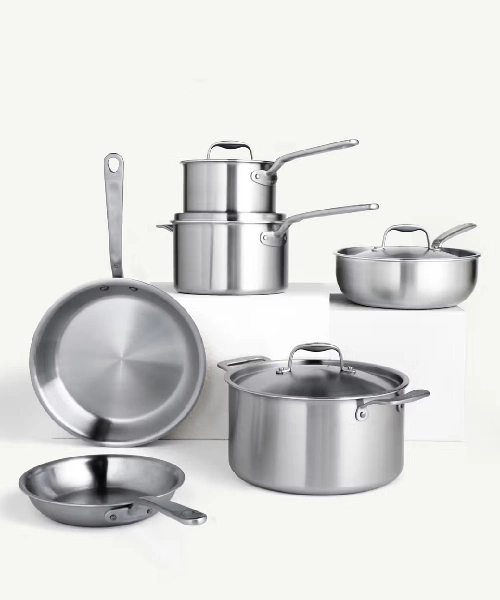
The brand’s most comprehensively tested product — Food Network independent test (February 2026), The Kitchn long-term review (June 2026), Prudent Reviews 3+ year evaluation (April 2026), and Saveur editorial recommendation all converge on the same conclusion: the 10-piece stainless set is the right way to equip a kitchen that cooks seriously. The set covers a skillet (8″ and 10″), saucepan, sauté pan, stock pot, and saucier — the five pieces that handle 95% of everyday cooking.
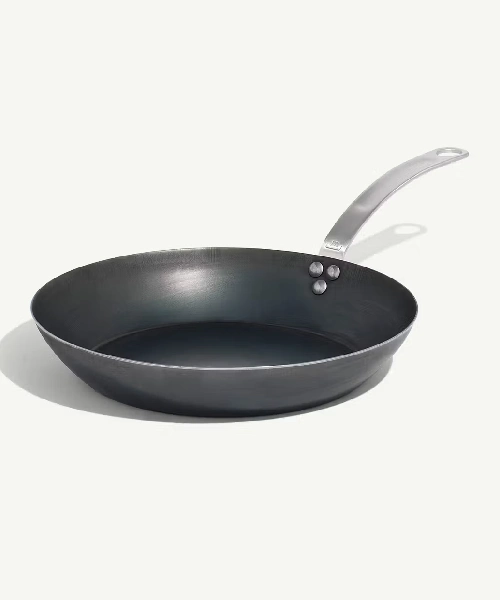
SAVEUR Editorial Director Kat Craddock’s personally endorsed product — “top notch.” Lighter than cast iron, 1,200°F oven safe, naturally nonstick with seasoning, the pan that pro chefs default to for searing proteins and high-heat sautéing. The MasterChef winner’s go-to is the carbon steel line. Buy if you’re willing to maintain it; skip if you want low-maintenance cookware.
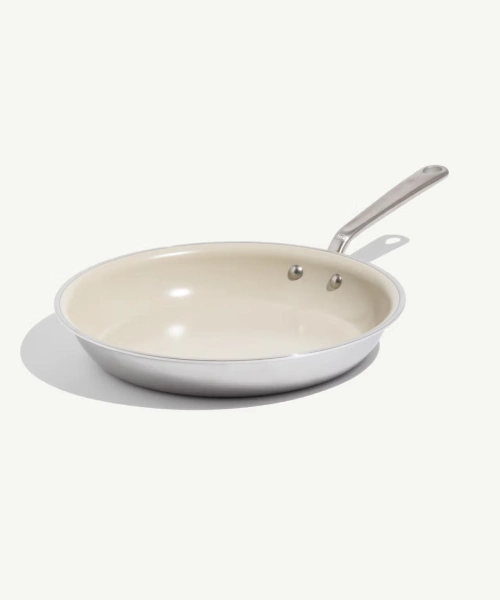
The brand’s PFAS-free ceramic nonstick — 5-ply stainless base, proprietary ceramic coating verified by Light Labs third-party testing (September 2025), oven-safe to 550°F, induction compatible. Food Network’s independent test confirmed it performs well for eggs, fish, and delicate foods. Low to medium heat only — the same discipline all ceramic nonstick requires.
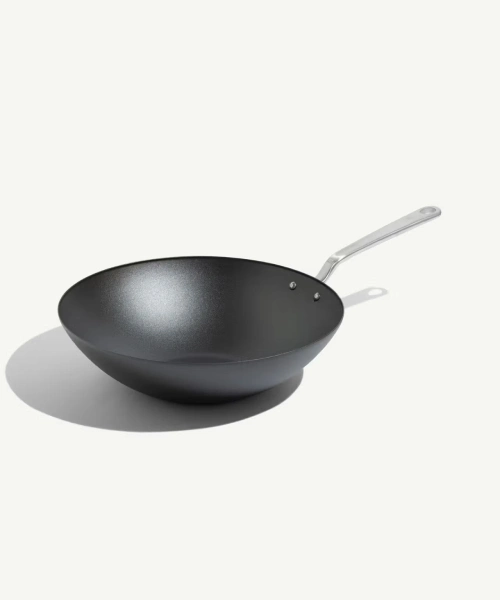
Good Housekeeping’s top-9 wok designation and SAVEUR’s explicit endorsement. The carbon steel wok’s high-heat responsiveness and pre-seasoned beeswax finish make it the most accessible entry into Chinese restaurant-style stir-fry performance for home cooks. Works on all cooktops including induction.
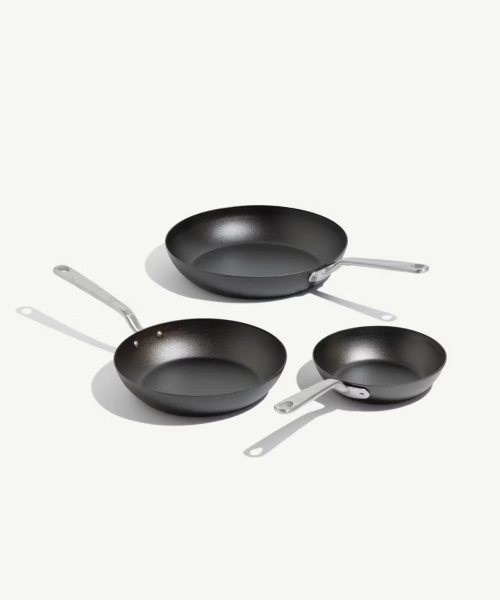
The documented Thingtesting buyer choice — “a pack of 3 of the seasoned carbon steel. They are all great quality.” Three sizes (8″, 10″, 12″) for complete carbon steel coverage of daily cooking needs. The seasoned version arrives with a more established base layer than the blue carbon steel, requiring less initial seasoning work from the buyer.
What Customers Actually Think
“These products are truly a worthy investment. They are high quality, durable, and perform great. I love to use the pans on a daily basis and for my catering business.” — Thingtesting verified buyer, commercial use documentation
“Made In’s cookware is nearly indestructible and effortless to clean. The stay-cool handle and rolled rim construction stood out most during testing.” — The Kitchn long-term reviewer (June 2026)
“Made In tends to be most chefs’ go-to cookware. I have tried the brand’s products a couple of times and love the end results.” — Dorian Hunter, MasterChef Season 10 winner, documented in Saveur
“Their carbon steel cookware is top notch — great wok and skillets. Nice if you want the general nonstick vibe of cooking with cast iron but don’t want to grapple with all that heft.” — Kat Craddock, SAVEUR Editorial Director
“I was so excited for our griddle and press, but they arrived with the handle slightly bent, which was disappointing for the price point. Customer service was helpful, but I expected better quality control.” — Thingtesting verified buyer, bakeware QC complaint
“I love my Made In set. I have one large nonstick that is my go-to for everything. The carbon steel I struggle with a little more in terms of maintenance, but it is a great, more natural nonstick once you get the hang of it.” — Thingtesting verified buyer
Is It Worth It?
Buy Made In if you cook seriously, want professional-grade durability, and are willing to learn proper technique with stainless steel and carbon steel. The 10-piece stainless set is the definitive first purchase — buy it during a Costco or Black Friday sale event. Add carbon steel pieces as your second line once stainless technique is established.
Do not buy Made In expecting nonstick ease from the stainless steel line — stainless requires preheating and technique. Do not buy carbon steel expecting zero maintenance — it requires seasoning, drying, and light oiling after every wash. Do not buy Made In for the bakeware line without inspecting on delivery based on the documented handle QC miss.
Made In vs Competitors
Feature | Made In (Stainless) | All-Clad D3 | Misen | Heritage Steel | Caraway | HexClad |
Price (10″ skillet) | $109 | $130 | $65 | $95 | $145 (ceramic) | $179 |
Ply Construction | ✅ 5-ply | ✅ 3-ply | ✅ 5-ply | ✅ 5-ply | ❌ Ceramic only | ✅ Hybrid |
Made In Italy/USA | ✅ Italy (SS) | ✅ USA | ❌ China | ✅ USA | ❌ China | ❌ China |
Chef Endorsement | ✅ MasterChef/SAVEUR | ✅ Broad | ❌ | ⚠️ Some | ⚠️ Some | ✅ Gordon Ramsay |
Carbon Steel Line | ✅ Yes | ❌ | ❌ | ❌ | ❌ | ❌ |
CeramiClad/PFAS-Free | ✅ Yes | ❌ | ❌ | ❌ | ✅ Yes | ❌ (PTFE) |
Stay-Cool Handle | ✅ Proprietary | ✅ Yes | ✅ Yes | ✅ Yes | ✅ Yes | ✅ Yes |
Retail Availability | ✅ Amazon, Walmart | ✅ Wide | ✅ Amazon | ✅ Amazon | ✅ Wide | ✅ Amazon |
FAQs
1. Is Made In Cookware actually worth the money?
For stainless steel and carbon steel — yes, based on documented commercial kitchen use, MasterChef winner endorsement, SAVEUR editorial endorsement, and Food Network independent testing. The pricing sits below All-Clad at comparable construction quality. For bakeware — approach with slightly more caution given the documented QC miss on the griddle line.
2. Where is Made In Cookware made?
The 5-ply stainless steel is made in Italy. Carbon steel is made in France. CeramiClad and nonstick pans are made in the USA. Country of origin varies by product line — check individual product pages for specific manufacturing location.
3. Is Made In better than All-Clad?
Made In 5-ply at $109 (10″ skillet) versus All-Clad D3 (3-ply) at $130 provides more layers at lower cost. Made In’s documented customer service response time (54 minutes average, Prudent Reviews) exceeds most premium cookware brands. The professional chef endorsement base is comparable. For value at comparable quality — Made In is the documented better choice.
4. Is Made In carbon steel hard to use?
It requires maintenance discipline — seasoning, no soaking, dry after every wash, light oil before storage. The Thingtesting buyer who owns both stainless and carbon steel documents “struggling a little more with maintenance” on the carbon steel. It is not hard; it is different from stainless. SAVEUR’s Editorial Director endorses it specifically, which reflects the professional kitchen’s comfort with that maintenance trade-off.
5. What is the best Made In product to buy first?
The 10″ stainless clad skillet at $109 — the most tested, most consistently endorsed Made In single product across independent review sources. Buy this first. Add the carbon steel wok or 12″ skillet second if you cook stir-fry or high-heat proteins. Add the CeramiClad frying pan if you want a nonstick option.
Final Verdict
Made In Cookware has earned the professional credibility its marketing claims — MasterChef winner, SAVEUR editorial director, catering business owner, and Food Network independent tester all converge on the same conclusion that the stainless and carbon steel lines perform at a professional level. The 5-ply Italian-made stainless construction, the stay-cool proprietary handle, and the carbon steel line that earns specific editorial endorsements from food professionals all reflect a brand that has grown from a DTC challenger into a documented professional kitchen standard.
Buy the stainless set, learn the medium-heat technique, and add carbon steel as your second line. Approach the bakeware line with delivery inspection in mind. The brand’s documented commercial use case — a catering business owner who uses Made In pans daily — is the clearest available statement of what the cookware delivers for buyers who engage with it correctly.
Scorecard
Category | Score |
5-Ply Stainless Performance | 9.5/10 |
Carbon Steel Line | 9.0/10 |
CeramiClad Nonstick | 8.0/10 |
Knives & Bakeware | 7.5/10 |
Stay-Cool Handle Design | 9.0/10 |
Professional Endorsements | 10/10 |
QC Consistency (Core Lines) | 8.5/10 |
Value vs Premium Competitors | 9.0/10 |
Overall | 8.8/10 |