
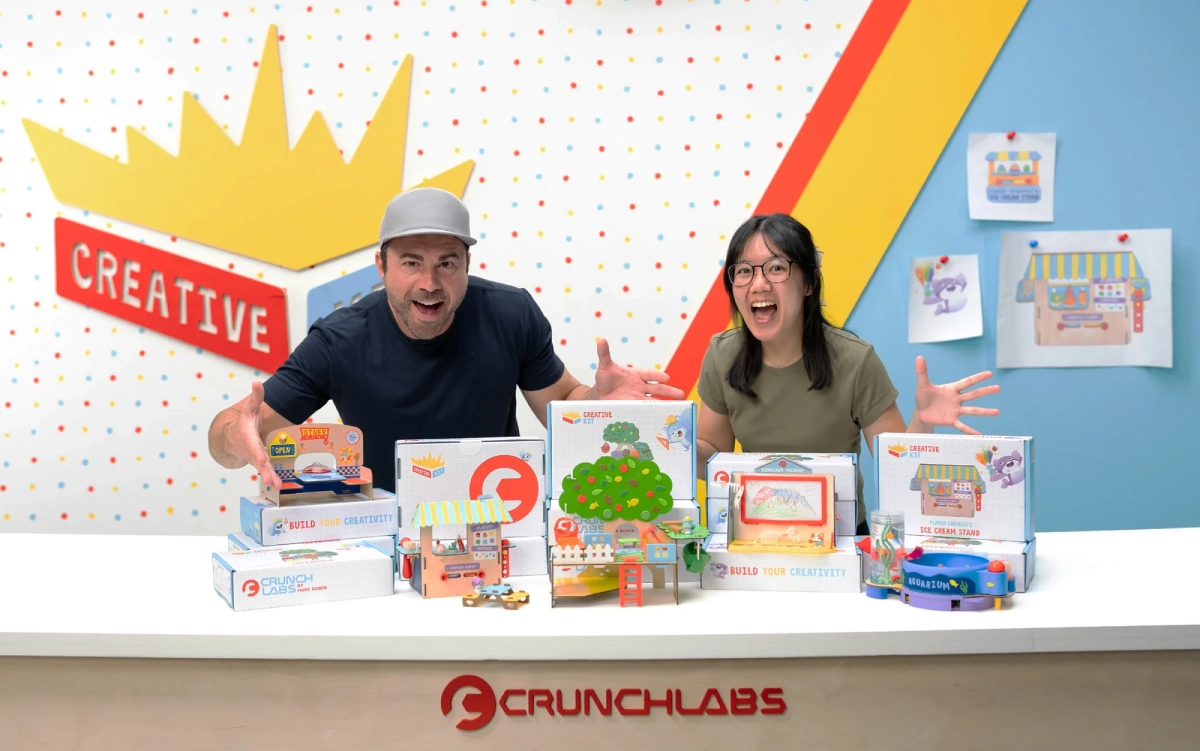
If you’ve been comparing STEM subscription boxes for kids, this CrunchLabs review should help narrow things down. CrunchLabs has built a strong reputation around hands-on engineering projects, playful learning, and the high-profile name behind the brand: Mark Rober. The company’s core lineup focuses on three age-based subscriptions—Creative Kit, Build Box, and Hack Pack—plus a growing set of gifts and merch.
For this review, I evaluated CrunchLabs using testing criteria that matter in real-world use: age targeting, educational value, product variety, ease of setup, replay value, giftability, and whether the subscription model feels worth the ongoing cost. I also looked at how clearly the brand explains each product and who each option fits best.
The big draw is simple: CrunchLabs makes engineering feel exciting instead of intimidating. And if you’re specifically considering the crunchlabs build box, it’s the most balanced option for many families because it sits squarely between beginner-friendly fun and more advanced STEM challenges.
This review uses a product-first editorial approach focused on usefulness, educational depth, and value. For CrunchLabs, that meant looking beyond the marketing and judging how well the kits are structured for different ages, how accessible the learning experience appears, and whether the lineup makes sense for gift buyers and repeat subscribers.
CrunchLabs is a STEM brand built around monthly engineering kits for kids, teens, and adults. On its homepage, the company positions itself as a place to learn to think like an engineer through hands-on building, creating, and hacking.
The company is closely tied to Mark Rober, who CrunchLabs presents as the founder and face of the brand. That connection matters because the whole experience is built around his teaching style, project explanations, and video-led approach to making science feel fun and approachable.
CrunchLabs is best known for its three core subscriptions: Creative Kit for younger kids, Build Box for kids in the middle range, and Hack Pack for teens and adults. The brand also sells gifts, merch, replacement parts, and extras, but the subscription boxes are clearly the centerpiece.
CrunchLabs is best for families who want educational toys with more structure than a basic craft kit and more personality than a generic science box. It is especially appealing for kids who like mechanisms, moving parts, problem-solving, and gadgets rather than open-ended art play.
For most shoppers, the question is not whether CrunchLabs looks fun—it does. The real question is whether the products justify the subscription model and whether the age targeting is accurate enough to make the experience feel rewarding instead of frustrating.
The brand frames each subscription as a complete, hands-on build experience. Build Box says each box includes a new build-it-yourself toy every month along with an illustrated instruction booklet and a video from Mark Rober. Creative Kit and Hack Pack follow a similar guided structure, adjusted for age and complexity. That kind of support matters because it makes the kits feel closer to a learning system than a one-off toy.
CrunchLabs stands out for a few reasons:
In real homes, the main advantage is engagement. These kits are designed to give kids something to build, use, and understand, not just something to open and forget. The crunchlabs build box looks especially strong here because it targets the sweet spot where kids are old enough to follow steps but still young enough to be wowed by the finished toy.
Hack Pack is more specialized. It makes more sense for teens and adults who genuinely want the robotics-and-coding angle, while Creative Kit is more accessible for younger kids who need simpler builds and a lower barrier to success.
Ease of use looks like a real strength. Build Box explicitly says builders get both a step-by-step booklet and an instruction video. The subscription comparison page also notes that Creative Kit and Build Box require no extra hardware, while Hack Pack may require a Mac, Windows, or Chromebook computer if users want to code and hack.
That makes the younger subscriptions easier for families who want a ready-to-go box. Hack Pack asks for a bit more commitment, which is not a flaw, but it does narrow the audience.
These are not maintenance-heavy products, but they do come with practical considerations. Families will need a place to store completed builds, loose parts, and refill items. The fact that CrunchLabs also sells replacement parts and extras suggests that at least some builds are meant to be played with long enough that replacements become useful.
CrunchLabs is priced more like a premium educational subscription than a cheap toy purchase. The value is strongest for kids who will eagerly build each month and for parents who want an ongoing STEM activity rather than a single weekend project. If your child loves engineering-style toys, the recurring format makes sense. If they lose interest quickly, the subscription model may feel expensive.
CrunchLabs does not appear to show a single five-item “Best Sellers” shelf on the pages reviewed, but its official site clearly spotlights the main product lineup and featured gift items. Using the brand’s own shop, homepage, and gift collection as the closest official equivalent, these are the five standout products shown on the brand’s site.
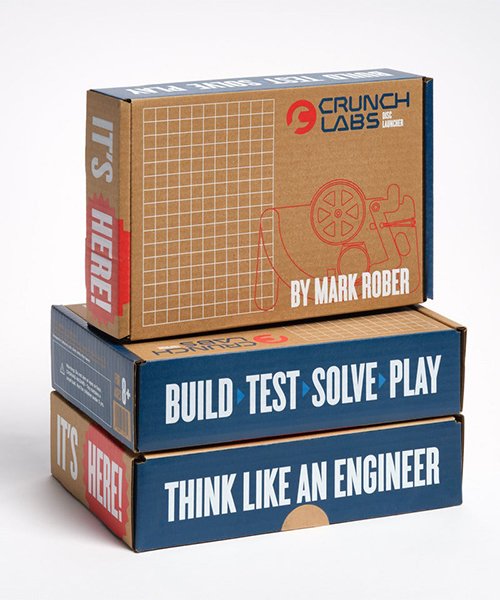
Who it’s best for: Kids ages 8 to 13 who want a monthly engineering project that balances fun with guided learning.
Top 3 key features
One honest drawback: It works best for kids who genuinely enjoy following build steps, so it is not a universal fit for every child.
Mini verdict: The most compelling all-around CrunchLabs product and the safest pick for most families.
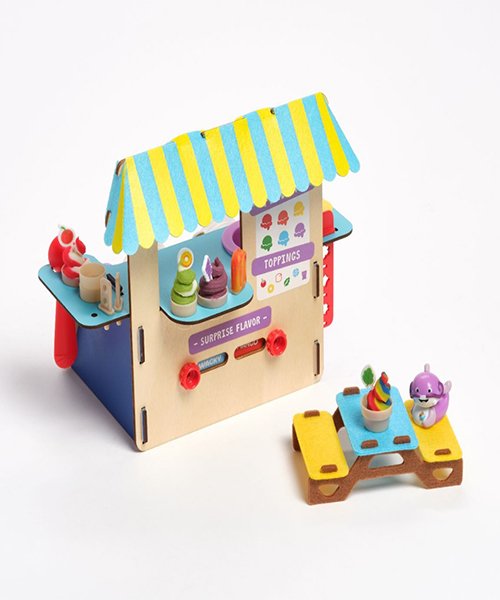
Who it’s best for: Younger kids ages 6 to 10 who want a gentler introduction to hands-on STEM building.
Top 3 key features
One honest drawback: Older or more advanced builders may outgrow it fairly quickly.
Mini verdict: A strong entry point for younger kids who are curious but not ready for tougher engineering builds.
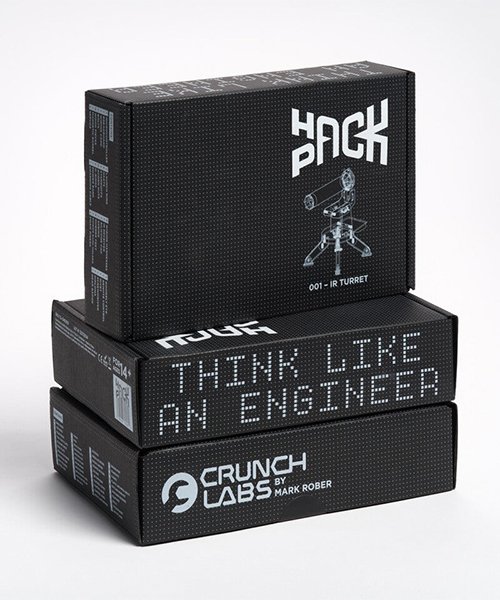
Who it’s best for: Teens and adults who want projects with more robotics and coding depth.
Top 3 key features
One honest drawback: It is clearly the most advanced option, so it may be too much for casual younger builders.
Mini verdict: Best for serious tinkerers who want more than a toy and are interested in the hacking/coding angle.
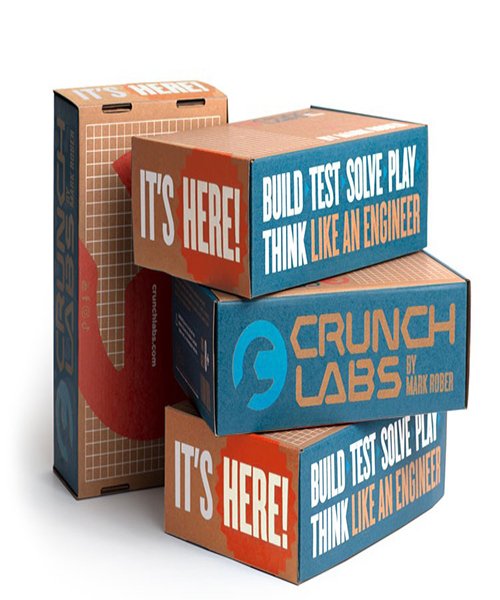
Who it’s best for: Shoppers buying for a child in another household who want flexibility without handling the subscription setup themselves.
Top 3 key features
One honest drawback: It is less exciting to open than a physical box or toy on day one.
Mini verdict: A practical and smart gift option when you know the child would enjoy Build Box but want the recipient to manage activation.
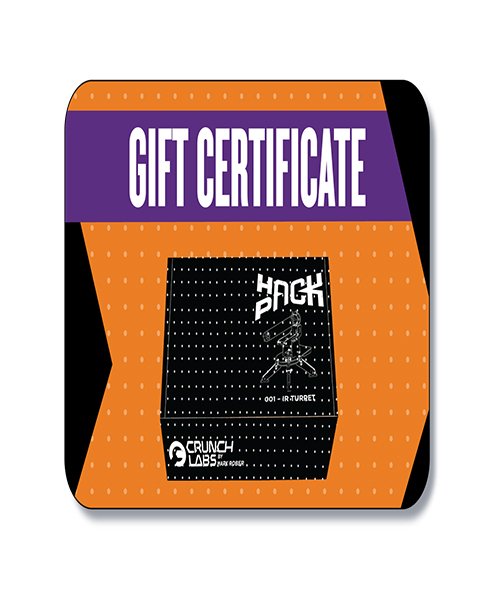
Who it’s best for: Teens or adults who want a more advanced CrunchLabs experience but may need to choose timing and setup themselves.
Top 3 key features
One honest drawback: Its value depends entirely on the recipient actually wanting the more technical Hack Pack experience.
Mini verdict: A useful gift format for older builders who are more likely to appreciate the robotics-and-coding focus.
CrunchLabs’ site emphasizes thousands of 5-star reviews and millions of boxes delivered, and the individual subscription pages reinforce the brand’s family-friendly, educational appeal. The messaging across the site suggests that customer sentiment is strongest around engagement, project fun, and the way the boxes make STEM feel approachable.
A few likely customer sentiment themes, paraphrased from the brand’s own review-heavy presentation:
Yes, CrunchLabs appears legitimate. The official site includes detailed subscription pages, a comparison page, FAQs, help resources, contact details, gift certificates, and policy pages. It also gives clear age ranges and explains what is included with each subscription. Those are all strong trust signals for a direct-to-consumer educational brand.
For the right family, yes. This CrunchLabs review comes out most positive for households that value hands-on STEM learning and know their child genuinely likes building and problem-solving. The brand is less compelling for bargain shoppers or kids who prefer open-ended crafts, but it is stronger than average for structured engineering fun.
What to look for before buying:
If those points line up, CrunchLabs has a strong case.
KiwiCo is the most obvious competitor because it also offers age-based project subscriptions. CrunchLabs feels more engineering-first and founder-driven, while KiwiCo is broader across science, art, and maker projects.
| Category | CrunchLabs | KiwiCo | Who Wins |
|---|---|---|---|
| Core focus | Engineering-led builds | Broader STEAM range | CrunchLabs for engineering |
| Brand personality | Strong founder identity | More category variety | Tie |
| Age targeting | Clear 3-tier subscription path | More overall options | KiwiCo for variety |
| Best for | Builders and tinkerers | Families wanting wider choice | Depends on child |
| Value | Better for recurring STEM fans | Better for broader exploration | Tie |
If your child is specifically drawn to mechanisms, gadgets, and build challenges, CrunchLabs is the more targeted pick. If you want more subject variety, KiwiCo may be easier to customize.
CrunchLabs highlights gift certificates, subscription plan choices, and sweepstakes tied to some subscriptions. Promotions can change, but the brand clearly leans into gifting moments like birthdays, holidays, and graduations.
You can buy CrunchLabs directly from the brand’s official website, where the three subscriptions, gift certificates, merch, and extras are all listed together. For most shoppers, buying direct is the clearest option because that is where the subscription terms, age guidance, and help resources live.
CrunchLabs is one of the more distinctive STEM subscription brands available because it knows exactly what it is selling: hands-on engineering experiences with a strong personality behind them. The lineup is easy to understand, the learning path is clear, and Build Box remains the best all-around option for most shoppers.
This CrunchLabs review ends in a positive place. The brand is not cheap, and it is not for every kid. But for children who love building and for parents who want ongoing STEM engagement, CrunchLabs looks well-positioned and thoughtfully structured.