
Every parent WhatsApp group has had this conversation at least once. Someone asks about screen-free audio players, and within minutes it’s a full debate: Toniebox vs Yoto Player, which one should you actually buy?
I’ve been in that conversation. I’ve also been the one who owned both — not because I’m particularly organised, but because my daughter turned four with a Yoto Player on her bedside table and my nephew at two has had a Toniebox 2 since Christmas. Between the two households we’ve had genuine daily use across different ages, different personalities, and different routines.
Here’s the honest version of the yoto vs tonie debate — based on actual experience, not spec sheets.
Quick Highlights
Yoto Player 3rd Generation
- ✅ 1,000+ cards covering ages 0–12+ — best content library in the category
- ✅ Built-in night light, OK-to-wake clock, room thermometer
- ✅ 24-hour battery life, 600+ hours of storage
- ✅ Free daily podcast, radio, sleep sounds — no card needed
- ✅ Bluetooth headphones supported
- ✅ If your child loses a card, the content stays in your app library
- ❌ Requires WiFi to initially download card content
- ❌ Small pixel display — not fully screenless
- ❌ Cards cost £7.99–£14.99 each
Toniebox 2
- ✅ Soft padded cube — genuinely drop-proof for toddlers
- ✅ Tonie figurines work as physical toys beyond the audio
- ✅ Fully offline — no WiFi setup needed at all
- ✅ New: sleep timer, sunrise alarm, Tonieplay games
- ✅ USB-C charging — same cable as your phone
- ✅ Suitable from age 1+
- ❌ Figurines cost £14.99–£19.99 each
- ❌ No clock, no night light, no thermometer
- ❌ Only 7-hour battery life
- ❌ Lose a Tonie figure and you lose that content — it cannot play from app alone
Best under 3: Toniebox 2 Best for 3 and above: Yoto Player Best for travel: Yoto Mini (£69.99)
Why Trust This Review
Real children. Many months of daily use across two households. Cross-referenced with Yoto Player parent reviews from Mumsnet, MadeForMums, Twin Perspectives, and Hard Launch Mom. No commercial relationship with either brand.
What's the Difference Between Yoto and Tonies?
This is the question most parents start with, and it’s worth answering clearly before anything else.
The difference between Yoto and Tonies comes down to how content is triggered, who the device is designed for, and what the child experiences.
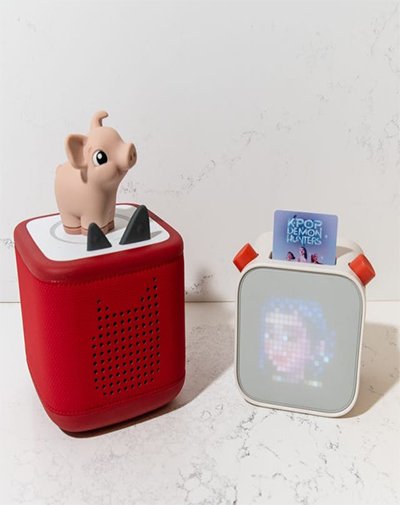
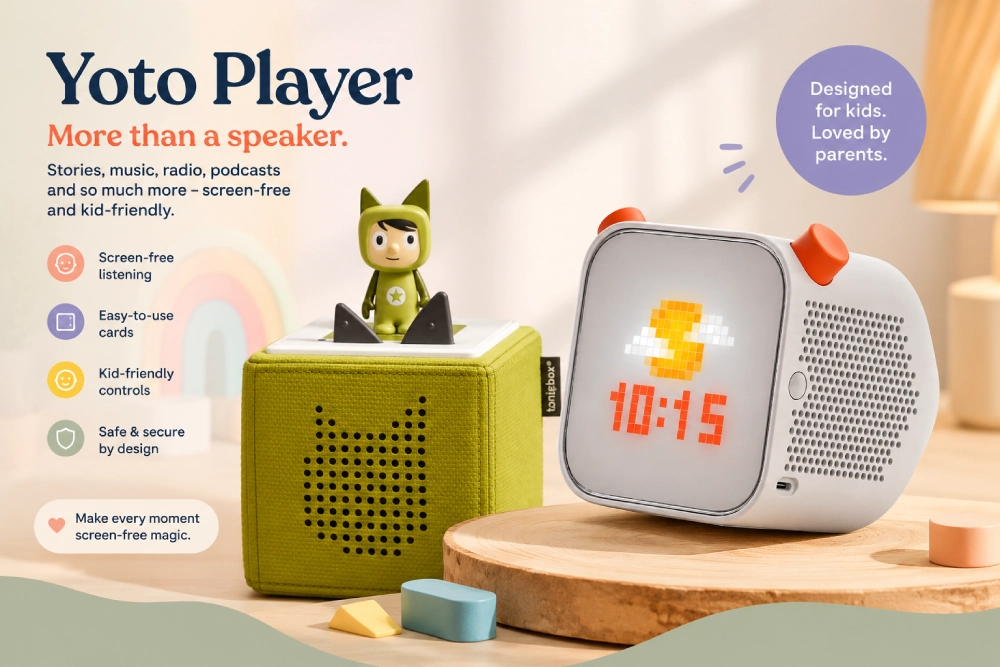
Yoto Player uses flat physical cards — roughly the size of a credit card — that slot into the side of the player. Insert the card, audio starts. The player has a small pixel display, a night light, clock functionality, and connects to WiFi for content downloads. It’s more gadget than toy. The experience is clean and independent, and the content library is the broadest in the category.
Toniebox uses three-dimensional figurines — actual characters like Peppa Pig, PAW Patrol, or dinosaurs — that you place on top of the padded cube. The minute the figure sits on the magnetic surface, the story begins. No buttons, no menus, no screen, no WiFi required. It’s more toy than gadget. The experience feels almost magical for a small child.
Same core purpose. Completely different execution. That difference explains almost every opinion in the yoto vs tonie debate.
About Each Brand
Yoto is a British brand founded in London — which matters for UK parents because the card library reflects it. Julia Donaldson, Roald Dahl, Judith Kerr, Horrible Histories, BBC content. The third-generation Yoto Player launched in 2023 with double the storage and triple the battery life of the original.
Toniebox is made by Tonies, a German company that brought the device to UK families in 2018. The Toniebox 2 launched in late 2025 with meaningful upgrades: USB-C charging (finally replacing the proprietary dock), Tonieplay interactive games, sleep timer with light fade, sunrise alarm, and expanded suitability down to age one. It won Gold at the MadeForMums Toy Awards shortly after launch.
Both are established, legitimate brands with large UK customer bases. Neither is going anywhere.
Age Suitability — The Deciding Factor
When parents ask which is better — yoto or tonies — the most honest answer is: it depends almost entirely on your child’s age.
Under 3 years old: The Toniebox 2 wins here and it’s not particularly close. The soft padded design handles being dropped, thrown, and sat on. The figurines are things a toddler can hold, carry, and use as regular toys independently of the audio. Placing a Peppa Pig Tonie on the box and hearing the familiar voice start immediately — that interaction works for a two-year-old in a way that slotting a card into a machine simply doesn’t yet.
My nephew at two manages his Toniebox entirely alone. He picks a Tonie from the basket beside it, carries it over, places it on top, and settles in. The independence it gives him at that age is genuinely impressive.
Ages 3 to 5: Both work. This is the age range where parents often find themselves debating most because both devices are genuinely appropriate. The Yoto starts pulling ahead in content variety — more educational depth, longer audiobooks, the free daily podcast, the clock and night light features that become useful bedtime tools. The Toniebox still has the figurine magic and the toy crossover value.
Ages 5 and above: The Toniebox vs Yoto Player comparison starts to feel less balanced. Yoto’s content for this age — chapter books, educational podcasts, Horrible Histories, Roald Dahl audiobooks, radio stations — has no real equivalent in the Toniebox library. A seven-year-old will still enjoy a Toniebox. A seven-year-old will grow with a Yoto.
MadeForMums put it well: the Toniebox is better for a more child-friendly, toy-like experience. The Yoto Player feels more premium and grows with your child. The Toniebox wows the kids more; the Yoto wows the adults more.
Content Libraries Compared
The difference between Yoto and Tonies becomes most visible here.
Yoto has over 1,000 cards in the UK store. The range spans ages 0 to 12+. It includes bestselling children’s audiobooks, music albums, mindfulness exercises, educational series, Disney content, and sleep sounds. Beyond purchased cards, the device includes significant free content: the Yoto Daily podcast (a short, well-produced children’s programme updated every weekday), family radio stations, sleep sounds, and the ability to create Make Your Own cards where you record any audio you want. A grandmother recorded herself reading a bedtime story onto a blank card before going abroad. Her granddaughter still listens to it every night.
One critical advantage in the yoto vs tonie debate: if your child loses a Yoto card, the content is not lost. It stays in your app library and can still play on the device. If your child loses a Tonie figure — and small children lose things constantly — that content is gone unless you buy a replacement. This is a practical consideration that doesn’t get mentioned enough.
Toniebox has a strong library for the under-fives. Peppa Pig, PAW Patrol, Hey Duggee, Disney Princesses, classic fairy tales, nursery rhymes, and the My First Tonies range specifically designed for babies and very young toddlers. For children up to five, most of what parents want is covered.
The gap opens as children age. Toniebox’s library for six-year-olds and above is noticeably thinner. The educational depth that Yoto delivers through its cards and free podcast content simply isn’t matched by Tonies at the older end.
The Real Cost Breakdown
Yoto Player 3rd Generation: £99.99. Cards cost £7.99–£14.99, with most popular titles around £9.99. The Yoto Club subscription at £9.99/month provides two card credits per month plus 10% off everything — for regular buyers it pays for itself quickly.
Toniebox 2: £94.99 for the device alone. Tonie figures cost £14.99–£19.99 each. Bundle deals (device plus three, five or seven Tonies) improve the per-figure price. The Tonieplay Controller is an additional £12.99 if you want the games feature.
The honest summary: Hardware prices are nearly identical. Tonie figures cost more per item than most Yoto cards. But Tonie figures double as physical toys — they go to nursery, to the park, into pockets. A Yoto card is a flat piece of plastic that lives in a wallet. Different value depending on how your child relates to physical objects.
Daily Life With Each Device
Toniebox 2: No setup required each time. No WiFi. No app. My nephew wakes up, picks a Tonie off his shelf, places it on the box. Audio starts. He’s done. My sister uses the sleep timer via the app — sound fades out, light dims, done. The USB-C charging on the Toniebox 2 is a real improvement over the original’s proprietary dock. Same cable as the phone.
Yoto Player: My daughter has a small card wallet she manages herself. Pick a card, slot it in. By week two she was entirely independent with it. The OK-to-wake light set to green at 6:30am has changed our mornings in a way I didn’t anticipate when buying it. The night light in a programmable colour is part of our bedtime routine. She asks for her “Yoto colour” every night without fail.
The Yoto requires a bit more initial setup — WiFi connection, app installation, initial content downloads. Once that’s done it works smoothly offline for most use. But that initial friction is higher than Toniebox’s plug-in-and-go experience.
Build Quality and Durability
Toniebox 2 is padded and soft. It has been dropped down stairs, thrown in a moment of toddler frustration, and used as a step stool. It’s fine. This is deliberate design for the age it serves and it works.
Yoto Player is solid plastic with a recessed screen for protection. It holds up to normal use from a four or five-year-old. It’s not designed to be thrown, and wouldn’t suit an eighteen-month-old who treats possessions as projectiles.
For children under three: Toniebox’s durability advantage is real and matters.
What Parents Actually Say
Across verified reviews on Mumsnet, MadeForMums, and independent parent blogs:
The parents happiest with Toniebox 2 are those with toddlers. The figurine magic, offline simplicity, and soft design come up constantly. “My two-year-old figured out the Toniebox within a day. The independence it gave her at that age was brilliant.”
The parents happiest with Yoto are those with children four and above, particularly those who’ve noticed the content library growing with their child. “We bought the Yoto when my son turned four. He now falls asleep with it every night listening to chapter books and uses the OK-to-wake light every morning. It’s changed our whole bedtime routine.”
The most interesting pattern: parents who had a Toniebox first and switched to Yoto when their child got older describe wishing they’d started with Yoto earlier — because the Yoto’s content range means they would have got more years out of it. The opposite rarely happens.
One parent tested both simultaneously: “We actually have both. My two-year-old has the Toniebox — the characters are fun and it’s more robust. My four and eight-year-old both use the Yoto. Much more choice, and it keeps them both engaged.”
Head-to-Head: Yoto Player vs Toniebox
Category | Yoto Player 3rd Gen | Toniebox 2 |
Best age range | 3–12+ | 1–5 |
Hardware price (UK) | £99.99 | £94.99 |
Content cost per item | £7.99–£14.99 | £14.99–£19.99 |
Content library depth | ✅ 1,000+ cards | Strong under-5s, limited 5+ |
Offline use | After initial download | ✅ Fully offline always |
Screen | Tiny pixel display | ✅ Completely screenless |
Night light | ✅ Yes | ❌ No |
OK-to-wake clock | ✅ Yes | ❌ No |
Room thermometer | ✅ Yes | ❌ No |
Battery life | ✅ 24 hours | 7 hours |
Drop resistance | Good | ✅ Excellent — padded design |
Physical play value | Cards only | ✅ Figurines as real toys |
Lost content policy | ✅ Card lost — content kept in app | ❌ Tonie lost — content gone |
Free content included | ✅ Podcasts, radio, sleep sounds | Limited |
Bluetooth headphones | ✅ Yes | ❌ No |
Interactive games | ❌ No | ✅ Tonieplay (controller extra) |
Subscription option | Yoto Club £9.99/month | None |
Overall longevity | ✅ Grows with child to age 12 | Best value to age 5 |
Which One Should You Buy?
Buy the Toniebox 2 if: Your child is under three. Full stop. The figurine magic is real at that age. Offline operation and zero setup friction suit toddler households. The soft padded design genuinely handles toddler treatment. You want a device that’s as much toy as audio player.
Buy the Yoto Player if: Your child is three or older. You want content that lasts beyond the toddler years — chapter books, educational podcasts, radio. The night light, OK-to-wake clock, and room thermometer actually appeal. You’re open to the Yoto Club to keep ongoing card costs manageable.
Buy the Yoto Mini if: You want a smaller, lower-cost entry to the Yoto ecosystem (£69.99). It uses the same cards as the full Player. Shorter battery, no night light or thermometer, but ideal for travel or a first device.
Have both ages in the house? Many families do exactly this — Toniebox for the youngest, Yoto for the older child. Both devices run independently and the two systems don’t interact, so there’s no compatibility issue. Just two children, two devices, significantly less screen time.
FAQs
Yoto Player vs Toniebox — which is better for a 3-year-old?
At three, both work. The Toniebox still has figurine appeal that three-year-olds love. The Yoto’s content range and clock features start to add real value. Most parents with three-year-olds who’ve tried both say the Yoto has more long-term mileage. It genuinely depends on the child.
What is the main difference between Yoto and Tonies?
Yoto uses flat physical cards; Tonies uses three-dimensional figurines. Yoto has a small pixel screen and WiFi connectivity; Toniebox is fully screenless and fully offline. Yoto suits older children better; Toniebox suits toddlers better. Both play audio content for children, both encourage independent listening.
Toniebox vs Yoto Player — which has better content?
For under-fives, Toniebox’s library covers most of what families want well. For ages five and above, Yoto’s library is significantly deeper — more chapter books, educational content, podcasts, and radio. For UK families specifically, Yoto’s British content library is a genuine strength.
Is Yoto or Tonies better for long-term value?
Yoto. The device supports ages 0–12+ and the content library grows with the child. Toniebox is brilliant for the toddler years but many families find they transition away from it by age five or six. Yoto can genuinely last a decade in a household.
Do Yoto cards work in a Toniebox?
No. The two ecosystems are entirely separate. Yoto cards only work in Yoto players. Tonie figures only work in Toniebox devices. If you switch from one to the other, the content doesn’t transfer.
Which is easier for a toddler to use independently?
Toniebox, clearly. Placing a figurine on top of a box is something a two-year-old can master in a single session. Slotting a card into a player slot requires slightly more dexterity and understanding. By age three most children manage both easily.
Is the Yoto Club subscription worth it?
If your child listens daily and you’re buying more than one card a month, yes. Two card credits monthly plus 10% off everything at £9.99/month saves most regular buyers more than the subscription costs. If you’re building a card library gradually, it adds up.
What happens if you lose a Tonie figurine?
The content is gone from that device unless you buy a replacement figure. The Tonies app shows your library but cannot push content to the box without the physical figure present. This is one of the clearest practical advantages Yoto has — losing a Yoto card doesn’t lose your content because it remains in your app library.
Similar Products Worth Knowing
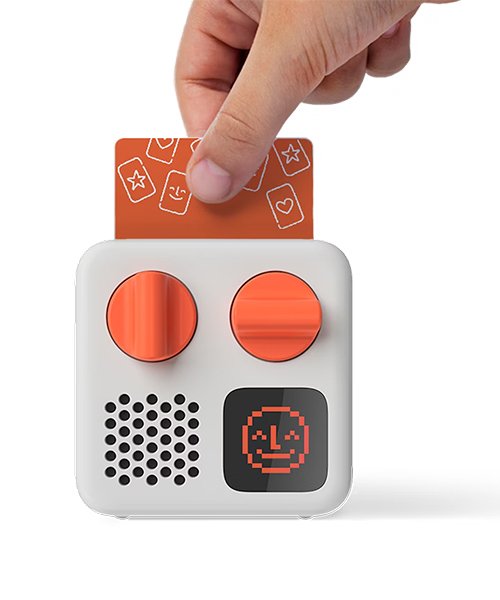
same cards as the full Player, smaller and lighter, shorter battery, no night light or thermometer. Around £69.99. Perfect for travel, younger siblings, or a lower-cost entry to the Yoto ecosystem.
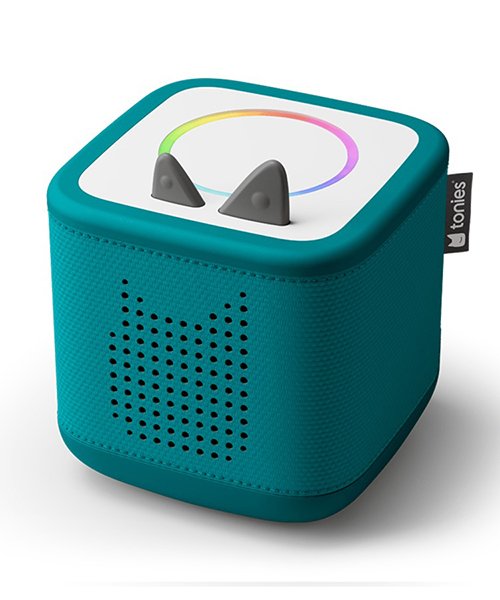
still available at a lower price than the Toniebox 2. All existing Tonie figures remain compatible. Worth considering if budget is tight and the Tonieplay games don’t appeal.
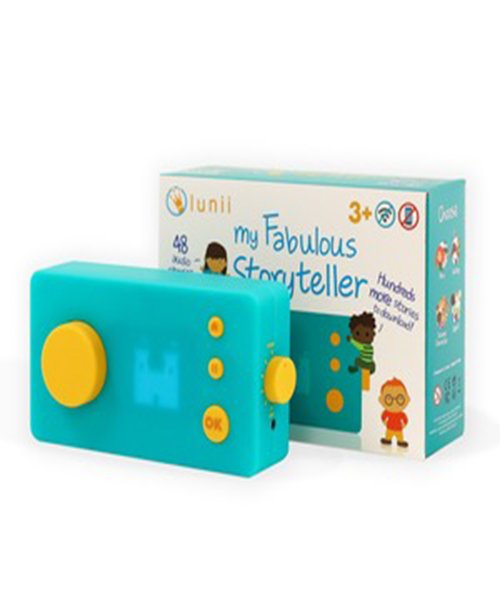
a French brand gaining UK traction. Generates personalised audio stories rather than playing pre-recorded content. More expensive and a different experience — worth researching if you want something more interactive.
Final Verdict
The Yoto Player vs Toniebox debate has been going on in parenting forums since both devices existed. Having lived with both, here’s where I’ve landed.
The Toniebox 2 is genuinely brilliant for toddlers. The moment a two-year-old places a figurine on the box and hears their story start — that simple, magical interaction is one of those rare things in parenting where the product does exactly what it promised. The soft design, the offline simplicity, the physical toy value of the Tonie characters — all perfectly calibrated for the first years of independent play.
The Yoto Player is the device that earns its place long-term. The content library genuinely grows with a child from three to twelve. The night light and OK-to-wake clock become quiet fixtures in the bedtime routine that you’d miss if they weren’t there. The free daily podcast and radio stations add value every day without spending anything extra. And the fact that a lost card doesn’t mean lost content is a practical advantage that any parent who’s watched a small child misplace a beloved toy will appreciate immediately.
Which is better — yoto or tonies? For toddlers under three: Toniebox 2. For everyone else: Yoto Player. And for many families with more than one child: both.
Toniebox 2: 8.5 / 10 | Yoto Player 3rd Generation: 8.8 / 10
Category | Yoto Player | Toniebox 2 |
Best for toddlers (under 3) | 7 / 10 | 9.5 / 10 |
Best for 3–6 year olds | 9 / 10 | 8 / 10 |
Best for 6+ year olds | 9.5 / 10 | 6.5 / 10 |
Content library | 9.5 / 10 | 7.5 / 10 |
Durability | 7.5 / 10 | 9.5 / 10 |
Long-term value | 9.5 / 10 | 7 / 10 |
Ease of use for child | 8.5 / 10 | 9.5 / 10 |
Extra features | 9 / 10 | 7.5 / 10 |